
Across the country, people are uniting to protect immigrant family members, friends, coworkers, and neighbors. ICE’s detention centers are everywhere, which makes federal policy a local issue in communities nationwide. Detention Watch Network advances federal advocacy to end immigration detention and supports local member and state-wide campaigns through information sharing, strategy development, public education and communications.

Find out who’s already doing this work near you
If you’ve decided to act in support of the dignity and rights of immigrants, it’s important to first, understand the people and organizations already doing immigrant justice work and leading decarceration efforts in your community (see Detention Watch Network’s member directory). After you’ve identified groups working for migrant and racial justice, connect with them to understand their values, the role people directly impacted by immigration detention play, and their work to reject ICE detention locally.
If you’re starting without the support of an existing organization or volunteer group, begin building your base by bringing together family, friends, coworkers, neighbors, and people who are directly impacted who believe in the dignity and rights of immigrants. Host meetings and educational events to learn more about ICE detention and have gatherings to build relationships and trust.
At Detention Watch Network, we connect people with community organizing already happening near them. Other groups like Showing Up for Racial Justice and Indivisible have great guides and resources for organizing in your community.
If you do have to start from scratch, make sure your events are bilingual or multilingual in the languages most prevalent in your community to ensure you’re as inclusive as possible (don’t forget language justice for your virtual events too).

Find out what ICE is up to in your community
Immigration policy can be intricate and confusing, so do some research to understand how ICE operates near you.
If there’s an existing ICE detention center in your community that you want to shut down, first understand what type of ICE contract the facility is operating under. ICE has a complex contracting structure with perverse financial incentives to expand the detention system.
ICE frequently contracts with private prison corporations like GEO Group and CoreCivic that incarcerate immigrants and make millions of dollars in the process. Local governments are also incentivized to cooperate with ICE and build or expand detention facilities as a means to bring in more funding for their dwindling budgets. According to the ACLU 90 percent of people detained in ICE custody are being held in facilities owned or managed by private prison corporations.
If there isn’t an existing detention center in your area, but you’ve heard news reports that ICE is looking to build a facility in your community, check SAM.gov, a government website for federal contracts. This is likely where ICE will start the process to build a new detention center or renew an existing contract by posting a Request for Information (RFI) or Request for Proposal (RFP). These documents will often tell you what ICE is proposing and could indicate who the agency is hoping to partner with.
Even if there isn’t a detention center near you, ICE could very well be detaining people in your community. Municipal police forces frequently coordinate and share data with ICE to identify and detain immigrants, so even minor offenses like a traffic violation could put an immigrant at risk. ICE also frequently conducts unannounced raids on homes, workplaces, and schools across the country, targeting immigrants for detention and deportation.
Familiarize yourself with existing legislation to scale back ICE detention
Many state and local governments have introduced (or passed!) legislation to scale back ICE detention and immediately alleviate suffering for thousands of people. Know how the law in your area shapes ICE detention near you. These acts and bills can also be helpful templates for figuring out what to demand locally to shut down your local detention center.
California, Colorado, Illinois, Maryland, New Jersey, Oregon and Washington have all passed state legislation to phase out immigration detention in their respective states after sustained local organizing. Communities in New Mexico, New York, and Massachusetts are currently working to pass an anti-detention legislation in their state.
In addition to state level efforts, the New Way Forward Act is federal legislation aimed at rolling back harmful immigration laws that lead to racial profiling and disproportionately result in the incarceration, deportation, and destruction of families of color and immigrant communities. If passed, the act could reduce mass incarceration by ending mandatory detention and phasing out for-profit immigration jails. Among other important fixes, it could allow immigration judges to consider a person’s individual circumstances and end the harmful practice of local police acting as deportation agents.
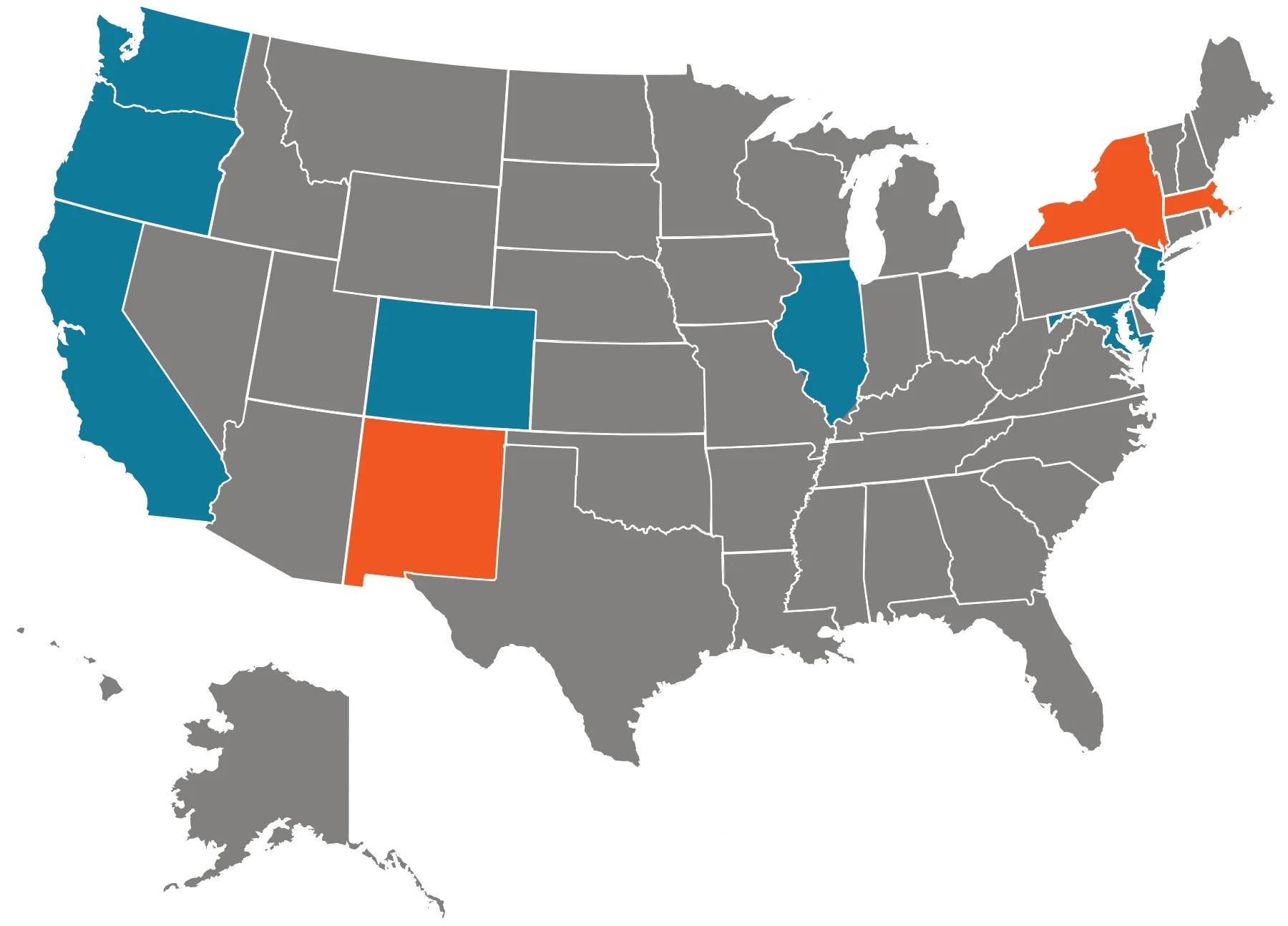
Passed state legislation to phase out immigration detention
Currently working to pass anti-detention legislation
Figure out who has the power
When politicians know that their constituents care about an issue, they are more likely to vote or take action in favorable ways. Establishing and nurturing relationships with your local, state, and/or national representatives is crucial to enacting policies that protect and affirm the rights of immigrants, and also to preventing policies that would negatively impact immigrant communities.
In our work, we’ve seen that it’s usually city council members, the mayor, and/or county commissioners who hold the power to either approve or deny a plan for an ICE detention center or to terminate an existing ICE contract.
Paint an alternative vision
Let your local elected leaders know that you demand better. When we invest in our communities through things like education, healthcare, job training and placement, and housing the average person can afford, everyone is better off. Instead of fighting over a piece of the pie, we can make the whole pie bigger — and our immigrant neighbors and friends, current and future, are a part of that solution. Our tax dollars need to be invested in things that strengthen our families — not the targeting, detention, and deportation of our communities.
Additional Resources
Reports
Analysis
- Advocacy and Organizing Toolkit
Using ICE Contracts and Inspections to End Abusive Detention - Ending Immigration Detention
Abolitionist Steps vs. Reformist Reforms