
The United States should be a place of refuge for people around the world seeking a better life or who face violence, starvation, poverty, war, or persecution. Rather than providing protection and living up to our ideals, the United States has a history of detaining parents and children seeking asylum in family detention centers.
Family detention is the inhumane and unjust policy of jailing immigrant parents with their children – including babies. Upon arrival in the U.S. families are locked up in detention centers, with little access to legal and social services, often experiencing widespread human and civil rights violations.
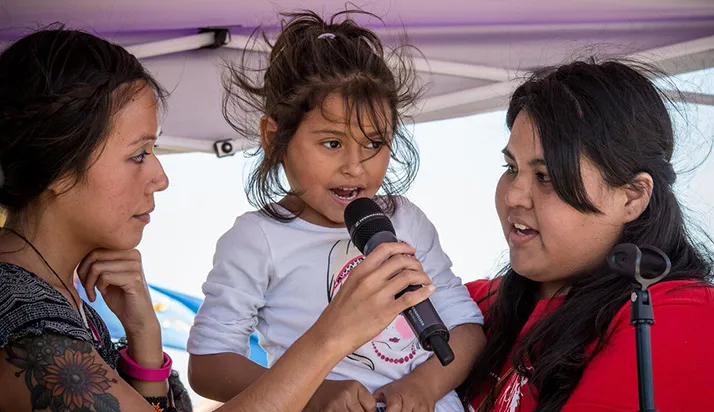
The government expanded the use of family detention in 2014 in an attempt to deter families seeking asylum from coming to the U.S. from Central America.
Prior to 2014, the Obama administration had ended large-scale family detention in Texas, with the Berks Family Residential Center in Berks County, Pennsylvania (Berks) being the only family detention center in operation. By the end of 2014, Karnes Residential Center in Karnes City, Texas (Karnes) and South Texas Family Residential Center in Dilley, Texas (Dilley) had opened and a fourth facility, the Artesia Family Residential Center in New Mexico, had both opened and closed amongst a firestorm of criticism. (See our report: Expose & Close Artesia Family Residential Center, New Mexico). With Berks, Karnes, and Dilley all detaining families, the family detention program in the U.S. became the largest since the internment of Japanese Americans in the 1940s with a combined capacity for over 3,000 people.
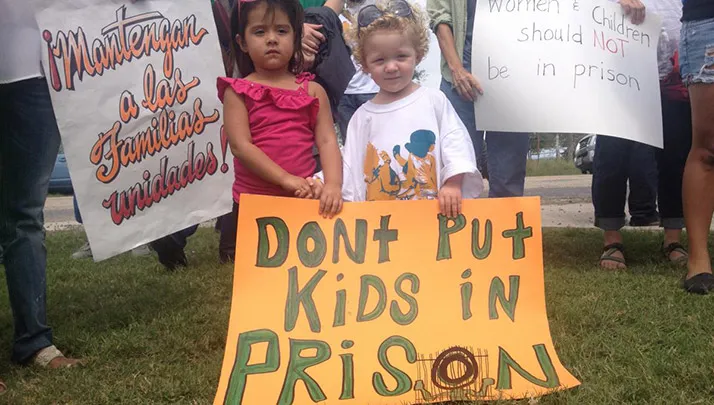
The alarming rise of family detention was met with the increasing demand for an end to the policy altogether. In 2015 a federal court ruling called on the government to release children with their mothers from family detention. Judge Dolly Gee found the current practice in violation of the Flores Settlement, an agreement that set the standard for the detention and treatment of immigrant children in the U.S. since 1997.
In 2017, the Trump administration began separating families seeking asylum in order to continue detaining migrant parents. This was intended to punish parents, coerce them into abandoning their asylum claims, and deter other families from migrating in the future. Amid public outcry against the cruel practice, the administration ended its large-scale family separation policy in June 2018, though the practice continued in smaller numbers for months after. In May 2019, ICE looked to expand the practice once again by forcing detained parents into a false choice of remaining in detention indefinitely with their children or relinquishing custody so their child can be released without them.
In 2021, the Biden Administration temporarily ended and then restarted the Migrant Protection Protocols (MPP), also known as the “Remain in Mexico” program, which requires many migrants seeking asylum at the U.S.-Mexico border to stay in Mexico while awaiting their immigration hearings. MPP is yet another form of government-sanctioned family separation. The reality is that all immigration detention is family separation. The Biden administration also increasingly subjected families to harmful “alternatives to detention” programming that constitute “digital prisons:” burdensome and punitive digital surveillance and remote tracking technology including ankle monitoring, smart watches; and traceable cell phones.
After years of consistent demands by community organizers, legal service providers, immigrant justice organizations, and members of Congress to release parents and children from family detention, the Biden administration stopped detaining families in ICE detention centers in 2021 only for the Trump administration to shamefully resume the practice in 2025.
In March of 2025, the Trump administration reopened the South Texas Family Residential Center (“Dilley”). Following the passage of the reconciliation bill in the Summer of 2025, which gave the Department of Homeland Security (DHS) $45 billion dollars to expand immigration detention, the administration is reportedly planning to open three new or expanded family detention centers with a combined capacity to hold more than 5,700 people. More recent reporting shows that the administration is also considering retrofitting warehouses to detain thousands more people, including families. Reports about conditions in Dilley have shown the horror that awaits families inside. Family detention centers have a well-documented history of negligence and abuse, including inadequate medical and mental health care, unhealthy weight loss among children, and disciplinary tactics including threats to separate families.
Family detention, like all immigration detention, is on the wrong side of history. Childhood should be marked by joy, play, learning, and safety. It's a fleeting period of time that has a tremendous impact on setting the foundation for a person’s lifelong well-being – it must be protected. The government must officially end all policies of family detention and surveillance immediately.
Take Action on Family Detention
Tell Congress: Free Families Now! End Family Detention
Tell your members of Congress: to end the inhumane policy of family detention; and as long as families remain in detention, to use their Congressional oversight authority to hold ICE accountable for complying with the law and ensuring the health and safety of the families they detain.
Take action
Free Families
Free Families is a way for communities to connect and coordinate around family separation, detention and deportation: to plan and carry out actions, vigils and more with songs and prayer that nuture and protect families.
Paper Dolls to Free Families
Paper Dolls to Free Families is a national campaign inviting people from across the country, including educators and students, religious and community groups, and even children currently detained by ICE, to create paper dolls with messages and colors of hope, solidarity, and love.
Latest News on Family Detention
February 12, 2026
February 5, 2026
February 2, 2026
March 6, 2025
Immigrant Justice Advocates Denounce the Return of Family Detention as Unconscionable
Family Detention Resources
Reports
- 2015 Policy Brief
Ending the Use of Immigration Detention to Deter Migration - September 2014 Expose & Close
Artesia Family Residential Center, New Mexico