Research and analysis exposing the inhumane immigration detention system.
Anthology of Abuse: The Case for Permanent Closure of the Torrance County Detention Facility
Anthology of Abuse: Violence and Neglect at the Winn Correctional Center
Carceral Carousel
If You Build It, ICE Will Fill It: The Link Between Detention Capacity and ICE Arrests
ICE arrests have a direct relationship to the availability and capacity of immigration detention centers. As detention capacity increases, so do ICE apprehensions. The report, If You Build It, ICE Will Fill It, from Detention Watch Network, the Immigrant Legal Resource Center, and Ceres Policy Research outlines the direct link between Immigration and Customs Enforcement (ICE) arrests and the availability and capacity of immigration detention centers. The report demonstrates that immigrants in counties with more detention space and counties with an overall higher carceral capacity are significantly more likely to be arrested and detained by ICE.
Broken Promises: Limits of Biden's Executive Order on Private Prisons
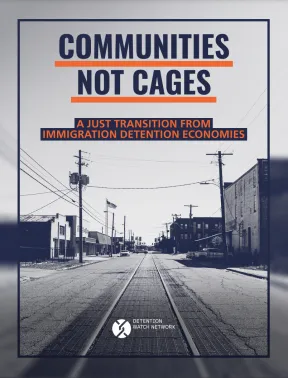
Communities Not Cages: A Just Transition from Immigration Detention Economies
Communities Not Cages: A Just Transition from Immigration Detention Economies examines the role of immigration detention in local economies and outlines a vision for a just transition away from economies dependent on detention centers. The report compiles research on prisons, economic development, and trend lines in adult and youth incarceration around the country, and draws on interviews with more than 20 community organizers, advocates, lawyers, and experts on immigration detention and adult and juvenile prison systems.
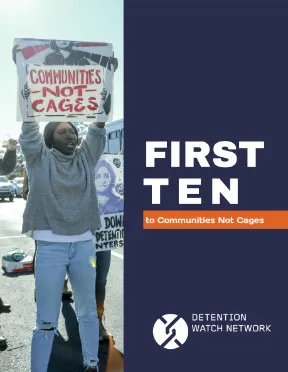
First Ten to Communities Not Cages
“First Ten to Communities Not Cages” campaign is demanding the shut down of 10 immigration detention facilities in the first year of the Biden administration. The ‘First Ten’ detention centers are emblematic of how the immigration detention system as a whole is inherently abusive, unjust and fatally flawed beyond repair.
Hotbeds of Infection: How ICE Detention Contributed to the Spread of COVID-19 in the United States
Immigration and Customs Enforcement’s (ICE) failed pandemic response substantially increased the number of COVID-19 cases in the U.S., according to Hotbeds of Infection: How ICE Detention Contributed to the Spread of COVID-19 in the United States, a report released by Detention Watch Network. Between May and August of 2020, ICE detention facilities were responsible not only for thousands of COVID cases in detention centers, but contributed to more than 245,000 additional COVID-19 cases in communities throughout the country.
Courting Catastrophe: How ICE is Gambling with Immigrant Lives Amid a Global Pandemic
Under ordinary circumstances, Immigration and Customs Enforcement (ICE) custody has proven to be deadly for the people detained at the agency’s network of over 200 jails and detention centers across the country. Now facing a global health crisis, ICE’s shameful record of medical negligence, limited and rotten food provisions, poor sanitation, and demonstrated inability to properly respond to past infectious disease outbreaks means that there is a serious risk of COVID-19 outbreaks at immigration detention centers.
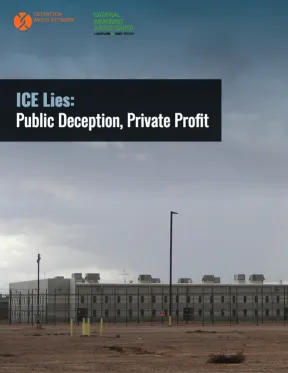
ICE Lies: Public Deception, Private Profit
ICE Lies: Public Deception, Private Profit, exposes Immigration and Customs Enforcement’s (ICE) egregious patterns of fiscal irresponsibility, opacity in management, and disregard for congressional oversight in its detention system. Such irresponsible governance results in system-wide abuses and even deaths.
A Toxic Relationship: Private Prisons and U.S. Immigration Detention
A Toxic Relationship: Private Prisons and U.S. Immigration Detention, builds on the overwhelming evidence that the privatization of Immigrations and Customs Enforcement (ICE) detention exacerbates due process violations, egregious conditions and transparency concerns that are endemic to the immigration detention system. In addition, the report amplifies the experiences of 42 individuals who were or are held in privately-run detention centers.
Banking on Detention 2016 Update
The widespread use of local lockup quotas throughout the immigration detention system was exposed in DWN and CCR’s report, Banking on Detention: Local Lockup Quotas and the Immigrant Dragnet, in June 2015. Since then, the government has released additional documents that shed light on the continued use of local lockup quotas, covering at least 24 detention facility contracts. This report update includes uncovering local quotas at family detention centers.
Fatal Neglect: How ICE Ignores Deaths in Detention
Abuse in Adelanto: An Investigation into a California Town’s Immigration Jail
This report details how the rural town of Adelanto relied on the prison industrial complex to revitalize their community only to realize that an influx of prisons did not bring economic growth. The report also delves into the abuses and violations that CIVIC visitation volunteers and detention monitoring tours have documented from speaking with detained individuals at the Adelanto Detention Center.
Lives in Peril: How Ineffective Inspections Make ICE Complicit in Detention Center Abuse
This report exposes how Immigration Customs Enforcement’s (ICE) inspections process for immigration detention obscures and perpetuates widespread abuses of detained immigrants. The lack of accountability for the operators and service-providers of immigration detention facilities has led to egregious conditions, medically negligent deaths, and abuses that violate the most basic of human and constitutional rights. The report draws on information obtained from contracts and audits of the most populated immigration detention facilities through a Freedom of Information Act request filed by NIJC in 2011.
Banking on Detention: Local Lockup Quotas & the Immigrant Dragnet
This report identifies the use of local “lockup” quotas, referred to as guaranteed minimums in detention facility contracts, in at least half of ICE’s field offices. These contractual provisions obligate ICE to pay for a minimum number of immigration detention beds that they are encouraged to not only fill, but exceed. As a result, local “lockup” quotas serve as a tax-payer funded insurance policy for private prison corporations. The report draws on information obtained from a FOIA request filed in November 2013.
Ending the Use of Immigration Detention to Deter Migration
This policy brief examines the inappropriate use of deterrence as a rationale for immigration detention. The brief serves as a resource for advocates to push back against the argument that you can punish people to stop them (and others) from seeking safety, which disregards constitutional protections and the United States’ international obligations.